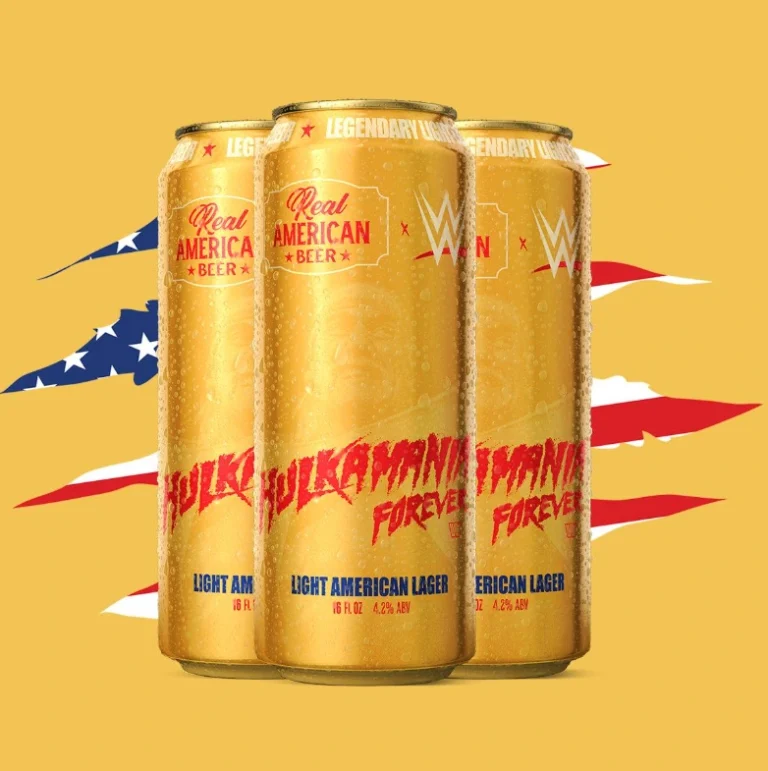
Hulk Hogan beer may bring a loud, patriotic can to the table, but the game you choose will decide whether the night actually works. Card drinking games are popular because they need almost no setup: a deck, a few drinks, clear house rules and a group willing to keep the pace fun instead of chaotic.
The best drinking games with cards are not always the ones that make people drink the fastest. A good party game gives players a rhythm, creates small moments of pressure, and leaves enough room for jokes, bluffing and social tension. The drink should support the game, not take over the room.
Before You Start: Set the House Rules First
Card drinking games fall apart when nobody agrees on the basics. Before the first card is drawn, decide what counts as one drink, whether players can skip a penalty, and when the group pauses the game. This is especially useful when people are drinking beer, cocktails or stronger pours at different speeds.
A simple rule works best: keep penalties small, let anyone switch to water, and never turn refusal into a joke. If someone does not want to drink, they can take a non-alcohol penalty, skip a turn or perform a harmless challenge. That keeps the mood social without turning the game into pressure.
For a beer-focused night, lighter drinks usually fit better than high-proof cocktails. Whether the table has lager, craft beer, hard seltzer or Hulk Hogan beer, the safest format is slow pacing and short penalties.
Kings: The Classic Rule-Making Game
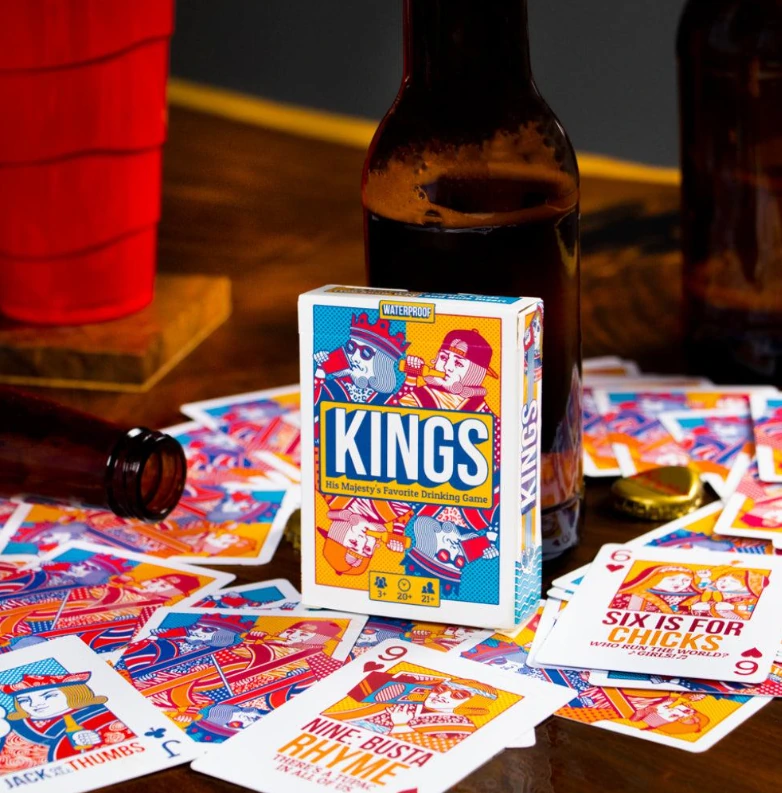
Kings is one of the easiest card drinking games to explain because every card triggers a different action. Players sit around a central cup or simply draw from a shuffled deck, then follow the rule linked to each card. The appeal is not strategy; it is momentum.
A common version works like this: ace starts a waterfall, two means “you,” three means “me,” four sends everyone to touch the floor, seven sends hands to the sky, and king lets the player create a rule. Other cards can trigger rhyming rounds, categories, questions or “never have I ever.”
The best part of Kings is that house rules make the game feel different every time. The risk is that too many rules can become confusing. Keep only the rules your group will actually remember. If half the table is asking what a card means every round, the game loses its rhythm.
Circle of Death: Better for Groups That Like Tension
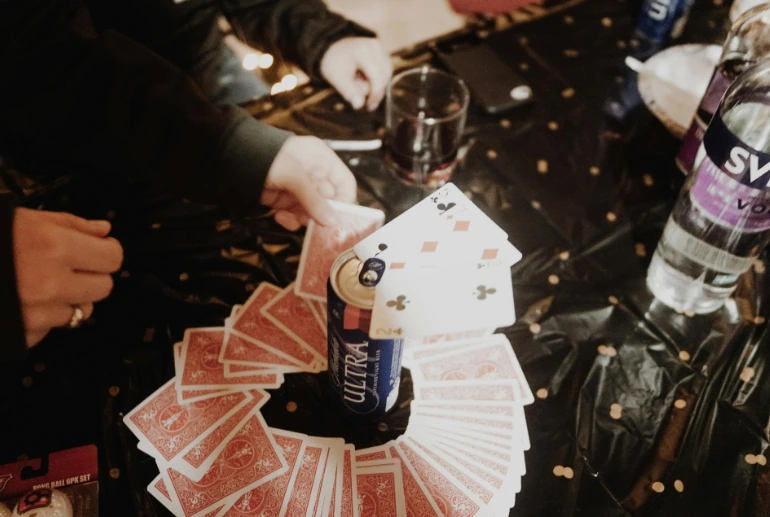
Circle of Death, also called Ring of Fire in some groups, uses the deck as a slow-building social trap. Cards are arranged in a circle, usually around a drink or center space. Players draw one card at a time and follow the rule attached to it. Some versions punish anyone who breaks the circle of cards.
This game works well because it adds suspense to a very simple mechanic. Nobody needs deep strategy, but every draw feels like it could change the table. That makes it a good option for mixed groups where some people know drinking games and others are learning.
The mistake is making the center-drink rule too aggressive. If the game includes a punishment drink, keep it reasonable or replace it with a group challenge. A party game should not punish one unlucky player so hard that the night becomes uncomfortable.
President: The Most Strategic Option
President, sometimes played under a cruder name, is the best pick when the group wants an actual card game rather than pure randomness. The goal is to get rid of your cards first. The first player out becomes president in the next round, while the last player gets the lowest rank and usually receives a disadvantage.
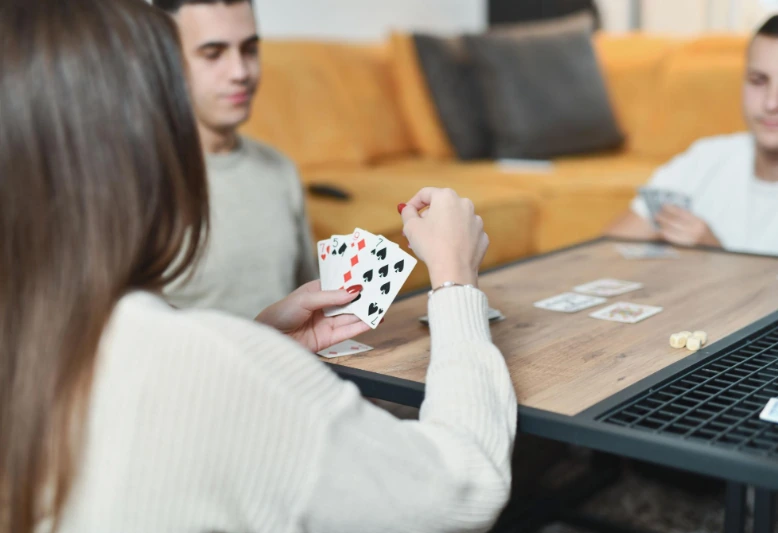
The social hierarchy is the point. The president may get privileges, while the lowest-ranked player may have to trade strong cards or follow extra rules. It creates a small political system at the table, which can be funny when the group understands that none of it is serious.
This game needs more explanation than Kings or Circle of Death. It also works better with at least four players. If your group is impatient or already loud, choose something simpler. If your friends like bluffing, ranking and petty table politics, President can carry the night longer than most card drinking games.
F the Dealer: Simple, Fast and Easy to Restart
F the Dealer is built around guessing. One player becomes the dealer, and another player tries to guess the top card of the deck. If the guess is wrong, the dealer says whether the actual card is higher or lower. The player gets another chance, and penalties depend on how close or wrong the guess was.
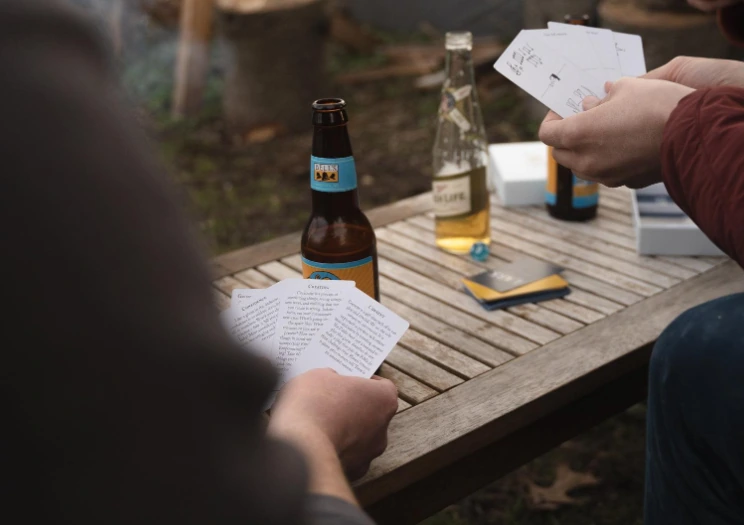
The game is easy because everyone understands higher or lower. It also creates pressure on the dealer, who can get stuck if players keep guessing badly. That gives the game its name and its energy.
Use small drink penalties here. Because turns move quickly, heavy penalties pile up faster than people expect. This is a good game for beer because the rhythm is light and conversational, especially if the group is sitting around a kitchen table or backyard setup.
Beeramid: Best for Bluffing
Beeramid, or Pyramid, turns memory and lying into the main mechanic. Cards are arranged face down in a pyramid, and the remaining cards are dealt to players. When a card is flipped in the pyramid, anyone who claims to have a matching card can assign a drink to another player.
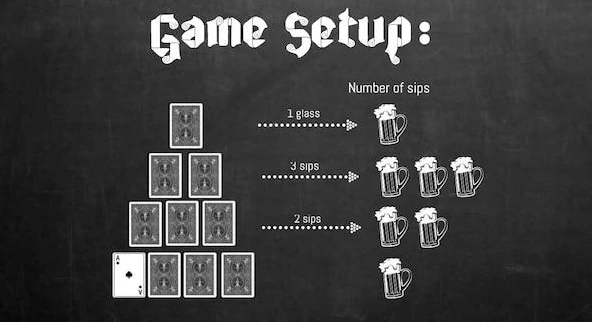
The twist is that players can bluff. The targeted player can accept the penalty or challenge the claim. If the bluff is exposed, the liar drinks. If the claim is real, the challenger drinks more.
Beeramid works because it gives quieter players a way to participate without needing to perform. They can bluff, call bluffs or quietly wait for a strong moment. The game becomes better when the group enjoys reading facial expressions and testing confidence.
Ride the Bus: Long, Structured and Chaotic at the End
Ride the Bus is more involved than most drinking card games, but it has a strong payoff. The first phase usually asks players to guess red or black, higher or lower, inside or outside, and suit. Wrong guesses bring penalties. Later, cards are arranged into a pyramid, and players use matching cards to assign drinks.
The final stage is the famous “ride the bus” section. The player left with the worst position faces a sequence of cards and drinks when face cards appear, depending on the house rules.
This game is best when someone at the table already knows how to deal it. If everyone is learning from scratch, the first round can drag. Once the group understands the structure, the final stage becomes a shared spectacle, which is why the game has stayed popular.
Killer: A Drinking Game With Deception
Killer is closer to a social deduction game than a normal card game. One player secretly becomes the killer, while the others act as detectives. The group debates, accuses and tries to identify the killer before too many players are eliminated.
This game works well when the group enjoys talking. It is less about card values and more about lying convincingly, reading people and making accusations that might backfire. Because it creates pauses for discussion, it can slow down the drinking pace compared with faster games.
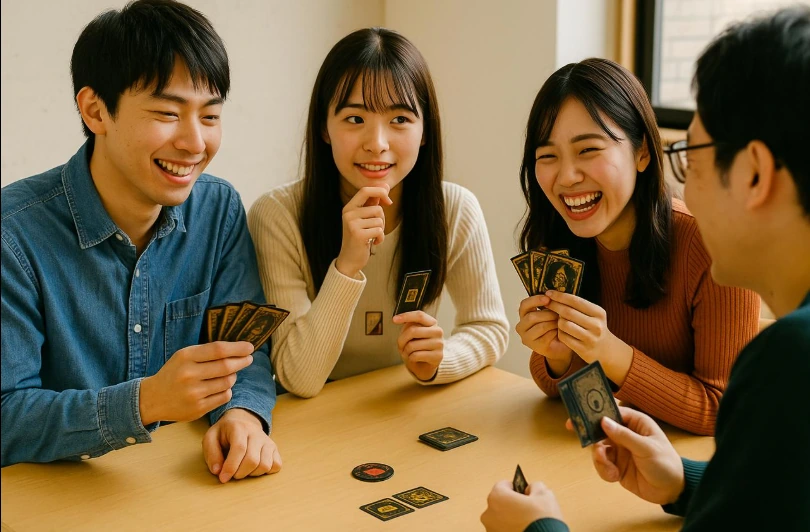
That slower rhythm is useful. Not every drinking game needs to push constant penalties. Sometimes the better party game is the one that gives people a reason to argue, laugh and misread each other.
Screw Your Neighbor: Quick Rounds, Low Setup
Screw Your Neighbor is built around one idea: avoid ending the round with the lowest card. Players may keep their card or swap with the person next to them, depending on the rules. The tension comes from deciding whether your current card is safe or whether your neighbor might be holding something worse.
Aces are usually low, kings are often protected from swaps, and players lose lives when they end with the weakest card. The game repeats until one player remains.
This is a good option when the group wants short rounds instead of a long, rule-heavy game. It also works well as a warm-up before moving into Kings, Beeramid or Ride the Bus.
Which Game Should You Choose?
The right game depends on the group, not just the rules. For a loud party, Kings or Circle of Death gets everyone involved quickly. For a smaller table, F the Dealer or Screw Your Neighbor keeps the pace easy. For a group that likes bluffing, Beeramid and Killer are stronger choices. For players who want a real card-game structure, President is the best fit.

The drink choice should match the game’s intensity. Beer works better than strong mixed drinks for long games because penalties can stack over time. If the table includes novelty cans like Hulk Hogan beer, use them as part of the party theme, not as an excuse to make the game more punishing.
Keep the Game Fun, Not Reckless
The best drinking card games are memorable because of the stories they create, not because someone drank the most. Set limits early, keep water nearby, and make sure everyone has a safe way home. If a rule stops being funny, change it. If someone wants to sit out, let them.
A deck of cards can carry an entire night when the group has the right rhythm. Choose a game that fits the room, keep the penalties reasonable, and let the beer stay where it belongs: part of the atmosphere, not the whole point.